Unit 7: Music Performance Techniques
Structured Practice Routine
Personally, my musical ability has improved from Units 1-4. I believe I am a decent vocalist with room for improvement. My natural vocal range is which makes me a soprano. I know my natural vocal range from doing scales with my singing teacher Bashirya. Knowing your natural vocal range is important so you can sing correctly to not damage your vocal chords.
Moreover, you can find songs that showcase your voice and find inspiring artists within your voice range. My vocal range is C3- C7.
https://www.youtube.com/watch?v=abLCxB7WdaQ
Strengths in Music Performance
Vocal Techniques
There is many techniques that can be used when singing to create emotion and improve your vocals. Vocal techniques under the umbrella of vocal pedagogy. Vocal Pedagogy is the study of the human voice, by analysing the art and science the human voice. Not only can singing techniques improve your vocal ability, but practicing vocal techniques help you understand how your anatomy impacts the way to sing. There is an array of different vocal skills ranging from breathing, resonance , projection, articulation.
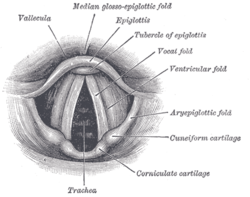
https://en.wikipedia.org/wiki/Vocal_pedagogy#/media/File:Gray956.png
https://en.wikipedia.org/wiki/Vocal_pedagogy
https://en.wikipedia.org/wiki/Vocal_pedagogy#/media/File:Gray956.png

https://en.wikipedia.org/wiki/Vocal_pedagogy
Diction- This is singing clearly so the audience can understand the message that is being portrayed through music. If the vocalists are slurring or mumbling the lyrics then the song loses it's essence. This is something that I always do when singing, pronouncing my t's and s's.
Diction is more than just singing clearly and loudly but it is also about mouth techniques.
General advice that my vocal teacher has given to me, is to make sure you mouth is wide when singing emphasising every single syllable and consonant. I learned how to articulate and the importance of this technique by my teacher Robert last term. Me and the singer were in a quartet for a song called "Mo Money Mo Problems" by The Notorious B.I.G. We were told that because we are singing together in a small group Robert told us that diction/phrasing was even more important so all the singers sound like one person.
Diction is more than just singing clearly and loudly but it is also about mouth techniques.
- Mouth Shape
- Tongue Placement
- Poor Control Breathing
General advice that my vocal teacher has given to me, is to make sure you mouth is wide when singing emphasising every single syllable and consonant. I learned how to articulate and the importance of this technique by my teacher Robert last term. Me and the singer were in a quartet for a song called "Mo Money Mo Problems" by The Notorious B.I.G. We were told that because we are singing together in a small group Robert told us that diction/phrasing was even more important so all the singers sound like one person.
Harmonies- I can successfully do harmonies. This music ability has more of an importance with vocalists that have of the role of backing vocalists. Harmonies are different pitches being sung simultaneously that blend and sound consonant. Harmonies may come naturally when singing in a choir or with other but like all skills, practice makes perfect.
Using harmonies as a technique is very effective for adding texture/ layers in vocals. They also emphasise the lyrics being sung, for example, when harmonies are song on certain lines that highlight the message of the song. Usually, I harmonise in thirds of the main melody because that is the easiest harmony I can do but with exploring my different tones, it will help me sing different harmonies/tones. I am backing vocalist for "Blinded By Your Grace Pt 2" doing the soprano harmony which is a triad from the main melody line.
Using harmonies as a technique is very effective for adding texture/ layers in vocals. They also emphasise the lyrics being sung, for example, when harmonies are song on certain lines that highlight the message of the song. Usually, I harmonise in thirds of the main melody because that is the easiest harmony I can do but with exploring my different tones, it will help me sing different harmonies/tones. I am backing vocalist for "Blinded By Your Grace Pt 2" doing the soprano harmony which is a triad from the main melody line.
Dynamics- Dynamics is important and can emphasis an emotion. Having freedom to change the volume of your singing can be very effective. Dynamics can enhance your performance. For example, when it is coming to the climax of a song, singers may increase the volume of your voice to heighten a specific emotion. I know I am able to use dynamics in my vocals because of a song that I did prior to this unit. The song is called "Mercy" by Duffy. The song is very upbeat and is the musical style of Motown. Motown derived from the 1960's, this music is a fusion of soul music and pop music.
https://en.wikipedia.org/wiki/Motown
https://www.openmicuk.co.uk/advice/vocal-dynamics/
Duffy when singing gives offs a sultry undertone by having a soft dynamic throughout. I incorporated Duffy's soft tone in the verses because I think they work very well in those sections.
However, I decided to have my own take on Mercy by increasing the volume. In the chorus I did sforzando. I believe that this made the song more interesting because the vocals aren't as repetitive.
Stage Presence- I think that I have good stage presence, I wasn't good at stage crafting in the first term units 1-5 but then I began to consistently practice once it was getting closer to my first performance at Leyton Sixth Form College. I make sure I use the stage as my dance floor and being interactive with the audience. Stage presence is the capability to charm and entertain an audience. I believe I showcased my stage craft skills in my solo song for the WOKE performance "Finders Keepers." I found performing in terms of stage craft awkward at first because I was new to it. My singing teacher Bashirya told me that every movement I make needs to be extravagant and over top because my movements needed to seen and interpreted by every single person watching me perform.
https://en.wikipedia.org/wiki/Motown
https://www.openmicuk.co.uk/advice/vocal-dynamics/
However, I decided to have my own take on Mercy by increasing the volume. In the chorus I did sforzando. I believe that this made the song more interesting because the vocals aren't as repetitive.
Stage Presence- I think that I have good stage presence, I wasn't good at stage crafting in the first term units 1-5 but then I began to consistently practice once it was getting closer to my first performance at Leyton Sixth Form College. I make sure I use the stage as my dance floor and being interactive with the audience. Stage presence is the capability to charm and entertain an audience. I believe I showcased my stage craft skills in my solo song for the WOKE performance "Finders Keepers." I found performing in terms of stage craft awkward at first because I was new to it. My singing teacher Bashirya told me that every movement I make needs to be extravagant and over top because my movements needed to seen and interpreted by every single person watching me perform.
Weaknesses in Music Performance
Tone- Tone can mean many different things in musical terms but with my vocals I mean to be able to sing with strength. My singing teacher, Bashirya and one of my teachers, Robert talked to me briefly on how to use my tone to my advantage as well as using different tones.
Strength- When singing high notes, my voice unintentionally becomes soft given my voice an airy feel. I don't want to sound like this because it doesn't make me sound confident when singing. This correlates with using your diaphragm when singing. The diaphragm is muscle in the shape of dome that is fundamental for breathing. The diaphragm is right below the rib cage.
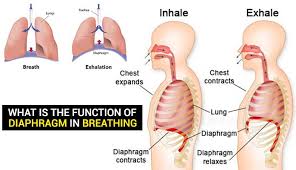 https://www.google.com/search?q=what+is+the+diaphragm&rlz=1C1CHBF_en-GBGB793GB793&oq=what+is+the+diaphr&aqs=chrome.0.0j69i57j0l4.13969j1j7&sourceid=chrome&ie=UTF-8
Posture- I think this is something that a lot of vocalists don't think about, but posture is actually beneficial in how we sing. This is something that I will have to think about more when singing. My vocal teacher said that a vocalist's instrument is not only their vocal cords but their body. Having a good posture helps your breathing by making it easier to access your diaphragm muscle. If you are slouched, your diaphragm won't be able to expand as much, thus stunting the amount of breath you intake.
https://takelessons.com/blog/singing-posture
Breathing- Since the first unit, my breathing has improved significantly but there is room for improvement. My singing teacher Bashirya stresses the importance of knowing how to breathe when singing. I am meant to do my breathing exercises everyday but I often forget or I am too lazy to do them. With the breathing exercises that Bashirya assigns to me still feels strange when I am doing them. The breathing exercise I have been given consists of breathe and sound control. For my breathe control, I am getting a good time on average 33-40 seconds. However, my sound control is not correlating with my breathe control as I only get on average 10-15 seconds.
Strength- When singing high notes, my voice unintentionally becomes soft given my voice an airy feel. I don't want to sound like this because it doesn't make me sound confident when singing. This correlates with using your diaphragm when singing. The diaphragm is muscle in the shape of dome that is fundamental for breathing. The diaphragm is right below the rib cage.
Posture- I think this is something that a lot of vocalists don't think about, but posture is actually beneficial in how we sing. This is something that I will have to think about more when singing. My vocal teacher said that a vocalist's instrument is not only their vocal cords but their body. Having a good posture helps your breathing by making it easier to access your diaphragm muscle. If you are slouched, your diaphragm won't be able to expand as much, thus stunting the amount of breath you intake.
https://takelessons.com/blog/singing-posture
Breathing- Since the first unit, my breathing has improved significantly but there is room for improvement. My singing teacher Bashirya stresses the importance of knowing how to breathe when singing. I am meant to do my breathing exercises everyday but I often forget or I am too lazy to do them. With the breathing exercises that Bashirya assigns to me still feels strange when I am doing them. The breathing exercise I have been given consists of breathe and sound control. For my breathe control, I am getting a good time on average 33-40 seconds. However, my sound control is not correlating with my breathe control as I only get on average 10-15 seconds.
Strengths in Music Production
Using Logic Pro X- I can successfully use the Logic software, being able to navigate through the DAW, creating my own tracks with ease.
Have knowledge on equipment- Understanding information about equipment used in music production like microphones ,their build and polar pattern. The different wires, how they look and their functions. Absorbing certain details is very useful for the music production so you know how to set up the music studio and live venues.
How to connect a mixer to a passive speaker- This is one of the first tasks we did in the studio room for music production and I can successfully connect a mixer to a passive speaker explaining the process step by step.
The Mixer- I know what a mixer is, and it's purpose. I also know all the different knobs and buttons on the mixer and each one's role. Down the mixer vertically there are channel strips. Each channel strip has the same buttons apart from the master channel. You refer to some buttons as pot.
Gain pot- This pot alters the volume of the channel.
EQ- The EQ can either increase or decrease the frequency on the audio. There are three types of frequencies: high, mid and low.
Auxiliary- The auxiliary sends audio signals elsewhere.
Weaknesses in Music Production
Confidence- I know the basis in Music Production but personally I would like to do a recording project individually because when doing Music Production I am generally in a group situation so I tend not to concentrate.
Using the facilities- I am stronger in Music Performance than Music Production and I believe that this is because of the time, consistency and commitment. I spend more time on Music Performance than Production. So one of my targets is to use the studio more often.
Using the studio and relating to the work I am currently doing in Music Performance will be beneficial. So right now, I am singing "Carry Me Home" by Jorja Smith and Maria Maria by Santana so one of these songs I will do on the recording project.
I can see myself morphing the skills I have now into music performance and production especially this unit because we are creating an EP so we have perform and record our tracks. I think that it is good that a musician at least understand the basis of music production. Musicians knowing music production helps them perform/compose better on a intellectual level. This term has encouraged me to morph my music performance and production skills because we are creating a EP and practicing for a performance on 28th March
I can see myself morphing the skills I have now into music performance and production especially this unit because we are creating an EP so we have perform and record our tracks. I think that it is good that a musician at least understand the basis of music production. Musicians knowing music production helps them perform/compose better on a intellectual level. This term has encouraged me to morph my music performance and production skills because we are creating a EP and practicing for a performance on 28th March
My Goals For Music Performance
To have better vocal agility
To have a better tone- I will be able to improve my tone by singing songs that out of my comfort zones. Because my voice is naturally in the high register, I sing songs that are high which makes me use my chest voice less. So by singing low notes, I subconsciously use my chest voice and diaphragm.
To improve my breathing/ sound control
Thursday 14th February 2019
To improve my techniques and skill in music performance as a vocalist, I've been doing several singing exercise as well as the assignments I get from my singing teacher Bashirya.
Here are the things I want to improve in terms of music performance:
- Using my diaphragm more when singing
- Using different tones of my voice
- Gain Vocal agility
- Sing with power
- Sustain My Breathe
To be able to improve and end up possessing these skills/techniques, I plan on doing vocal exercises everyday for a average of 30 mins. These exercises are going to be varied. On certain days I may want to focus on certain vocal techniques. I do vocal exercises from my singing teacher Bashirya and from a YouTube channel called Jacob Vocal Academy. My teacher recommended Jacob Vocal Academy, suggesting that I should do the soprano scales. All these techniques and skills that I want to improve on/gain will not all be worked on in every single session to refrain from me getting stressed and overwhelmed from me doing too much. So my first personal practice session I focused on was singing with power and using different vocal tones.
The exercises I did today were:
5 Minute Vocal Warm Up
I do this 5 minute vocal warm up exercise because it warms up for voice for singing and the other vocal exercises that you are going to do after. I do this before singing and my personal practice because the vocal cords are a muscle so we must strengthen and prepare it by warms up. If your voice is not warmed up and you go into singing, you can potentially damage your vocal cords.
Resonance- Vocal Exercise
I do the vocal resonance exercises because it is a really good technique and help your tone of voice. This technique when singing is aurally pleasing and helps with not making your voice sound light because it makes your tone of voice sound rich. I want to used this technique when singing "Maria Maria" especially the low notes as it would sound good.
Turning Tables- Adele
Linking back to resonance and tone, I was assigned to sing Turning Tables by Adele by Bashirya for my tone and to experiment. I was finding it hard to create power and sing repetitively when singing especially in higher registers. This was noticed by Robert and Bashirya when I was singing "Finders Keepers" so I was given this song called "Turning Tables" because she sings in a low, mid and high registers.
From my singing teacher, she told me to sing through "Turning Tables" by Adele because it helps with my tone. She also said that this song is good song for me experiment with different tones and pitches. These exersises definitely helped with my tone and gaining power in my voice which are two things I wanted to improve as a vocalist. However, I need to do these exercises everyday for maximum improvement.
What Went Well
Vocal Warms Up, made me feel confident and having completed my vocal exercises. I can now do lip rolls which is great for warming your voice and face. The resonance exercise I found interesting because the exercises made me make different noises and sounds and I soon felt a vibration in my chest area creating a lovely tone. I think this exercises helped with finding my tone than singing "Turning Tables"did.Resonance is a technique that creates a vibration in your vocals creating a different tone/flavour. You can have resonance in several parts of your body. Resonance happens from these body part:
- The chest
- The throat
- Nasal Cavity
- The sinuses
What Didn't Go Well
I was finding it hard to explore my tone, which I was mean't to whilst singing "Turning Tables" by Adele. I find it hard to sing in low notes and to sing with more powers when the pitch got higher I didn't enjoy this exercise.Targets For Next Week's Session
- Hit high notes on the agility vocal exercise
- Execute the bridge and chorus for Turning Tables
- Practice sound control and try to get 15+ seconds
Thursday 21 February 2019
Still focusing music performance , I haven't done any activities relating to music production because I haven't gone to the studio. Part of me improving the skills in the music production was for me to use the facilities like the studio more often, learning and gaining knowledge/confidence along the way. One of my teachers Dele has stressed this to me.I am still doing my vocal exersises that I've done last week but adding more exersises. For example I wanted to gain vocal agility so I asked Bashirya, my singing teacher and she told me that one of the ways you can improve your agility is by singing scales that have constant changes in the notes. The reason I want to improve my agility is because I am singing "Maria Maria" for a performance, and after the bridge going into the last chorus, I need to add more to the chorus, such as ad libs and runs to make the song more interesting. When singers do ad libs and runs, they agility because the notes they are singing are changing at a fast pace.
This is the video my singing teacher gave to me for my vocal agility:
What is agility in singing?
Vocal agility is the ability to sing consistently and freely. So when you able to sing up and down pitches and without strain. Vocal agility is also known as vocal weight.You can think of vocal agility like agility in sports because in singing you use a muscle called a larynx. The larynx is a hollow muscular organ that contains the voice box. This muscle is so important, the reason we can sing and talk. I want to work on my agility because I am singing a song called "Maria Maria" so I am not singing held pitches but rather the notes are constantly changing so I need to sing the notes fast enough and clear enough.

https://www.quora.com/What-is-vocal-agility
https://my.clevelandclinic.org/health/treatments/16611-laryngeal-cancer-care-path
The exercises I did today were:
5 minute Vocal Warm Up
Vocal Agility Exercise
Breathing Vocal Exercise
I decided to focus on my breathing and agility today. The 5 minute warm up is an exercise I will always do when vocal training it prepares my for voice for singing and practicing these different techniques.
What Went Well
As usual all the exercise in vocal warm ups were good, I had no difficulty doing them. For the breathing I was very happy because I got 15 seconds for my sound control. Usually for sound control, I get 10 seconds or less. This is because I talked to Bashirya and she told me that when I feel like my air is starting run out, I should use push from my diaphragm and move my body around. This is great advice because my sound control increased by 5 seconds.
What Didn't Go Well
At the start of the agility exercise, I was doing well, but when it got to the higher part of the scale I was doing it but I was wavering and I think it had to do with being nervous about singing that high. But I am glad that I ticked off my targets that I set for myself last week. I hope that I will continue and see a huge difference in my singing in the near future.
Targets For Next Week's Session
- Get 16 seconds + for my sound control/breathing exercise
- Execute the higher section for the vocal agility exercise
- Do a vibrato vocal exercise for my vocal tone
Thursday 28th February 2019
For this personal practice session this week, I wanted to continue with the exercise I have done prior, which are the 5 minute vocal warm up, vocal agility exercise and breathing exercise but I am now going to focus on vibrato. The reason why I am focusing on vibrato is because it such a useful vocal technique when it come to adding"flavour" to your tone. I think vibrato similar to resonance in a way because it is relate to frequency/waves of your voice. Vibrato is the technique of singing two note that are of very similar pitches and alternating between them. This techniques is most effective when it is subtle.
Although this is a technique, vibrato can naturally happen. The reason why it can happen is because in our throat, we have our larynx which is a hollow muscle. Like all muscles in our bodies, after constant use, they get tired and contract because of tension. Our larynx/ vocal folds contracting because of vocal tension is normal and is a reflex that the body does. Just because vibrato happens naturally doesn't mean you can control it, your body makes oscillations subconsciously. The reasons why I am doing
Which is why if want vibrato in your voice, you need to learn and do vocal exercises so you can use this technique whenever you want instead relying on you body.
The exercises I did today were:
I did my usual exercise starting with my five minute warm up and the other vocal exercises, this includes my breathing/sound control exercise.
5 Minute Vocal Warm Up
Vocal Agility Exercise
Vibrato- Vocal Exercise
The reason why I am doing vibrato exercises is because I think it is a really interesting technique to use when you don't want to sing on the same note but still stay in key. I think make those who are listening to you sing will become more engage because it gives your voice an emotional quality which why I think it's a good quality when singing love songs for example. I want to use this technique also in "Maria Maria" when it is the bridge because of the sentiment in the lyrics. The reason why I am focusing on "Maria Maria" and correlating it to my personal practice is because it is my solo song.
Maria you know you're my lover
When the wind blows I can feel you
Through the weather and even when we're apart
It feels like we're together
When the wind blows I can feel you
Through the weather and even when we're apart
It feels like we're together
What Went Well
Today's session was good because I sang the higher notes of the vocal agility exercise with more ease. I am happy because this means that my agility is improving and I can hear and feel a difference. My singing teacher told me that when you practice, you are actually training your voice/ vocal folds and after repeating the vocal exercises for a certain amount of time, you'll notice that the exercise becomes easier and you don't need to think as much or not at all when doing it. This is called muscle memory.
What Didn't Go Well
It is not necessarily that these exercises went badly but the vibrato exercise I did was very difficult to me because the of the tremor- like impersonation I had to do. I didn't expect me to get straight away, but it was definitely harder than I thought so the vibrato vocal exercise is going to the main focus. One of my targets for this session was to increase my sound control to 16 + seconds but the highest time I got today was 10. I was confused because I was getting better. My singing teacher said that my sound control should be higher than what I am currently getting because my breath control is 35+ seconds which is really good. After talking Bashirya, she told me that she thinks the reason I am not increasing my time in my breath control is because of two things. 1- I think too much when doing sound control because I am trying hard to beat my personal best but this just distracts me. 2- For the sound control I need to suck in air and release my breath on "e" sound. which is why I get distracted.
Because of this, Bashirya told me to relax before doing this exercise. I am lucky because I do my personal practice on Thursday as well as my singing lessons so I get given great advice from Bashirya and do what she wants me to improve on in my personal practice.
Because of this, Bashirya told me to relax before doing this exercise. I am lucky because I do my personal practice on Thursday as well as my singing lessons so I get given great advice from Bashirya and do what she wants me to improve on in my personal practice.
Targets For Next's Week Session
- Improve on the vibrato vocal exercise
- Get 16+ seconds on the sound control exercise
- Sing "Turning Tables" to explore my tone in more depth
Thursday 7th March
This week I have been focusing on music production and Music Performance. I am doing my personal practice in terms of doing my vocal exercise but I have been doing a lot of music production because for Unit 5 we are making an EP, so I have been in the studio more often. I am not the sound engineer but one of my class mate Anastasia, is the sound engineer and studio manager so I learned a lot of from her by watching what she does and asking questions. I help plugging in equipment and helped out with sound/gain check. I am proud of myself because music production is something that I have always find difficult so I am trying to push my self out of comfort zone and get more involved.


What went well
Today's session was good because I see the difference in my singing, when I sang "Turning Tables"
and there is a difference from when I sang it weeks ago. I am more confident with the song because I know the lyrics and I'm no longer nervous about singing different tones. For my breathing/sound control, I've gotten better and accomplished my target because I got 20 seconds. This is my personal best and I am happy because this technique is something I was struggling with. I now notice that when I sing a section in a song in that requires a lot of breathe, I noticed that I am finding it less difficult.
What went wrong
The vibrato is something that I am still finding difficult to do because it is a new concept to me. It is getting closer to the night of the performance, 28th March so I am not sure I will be able to learn the technique and execute it quick enough for the Momentum performance but I will still practice the vibrato vocal exercise just to widen my vocal ability.
Targets For Next Week's Session
- 25+ seconds for breathing/sound control
- Improve on vibrato vocal practice
Thursday 14th March
This week for personal practice I have been very interactive in the recording studio so I am happy because that one of my goals/targets in music production. Today's session, I am doing my sound control and vibrato exercise. I also practiced "Maria Maria" because the show is very close so I need to make sure that practice the song so I can sing the show to the best of my ability. I was finding it hard to remember the lyrics so I research some advice on how to remember things and here was the advice was given to me. Obviously, practicing and singing the lyrics over and over again is an effective way.
- Analyse the song lyrics
- Singing the karaoke of the song
- Feeling the emotion of the song
What went well
I am confident when singing "Maria Maria" now before I didn't know the lyrics and the song is easier for me to sing now because I find it easier to glide to other notes at a fast pace.
Targets that I have for next week are different than the other session because the performance is next week so I am going to focus more on the performance so the tasks that I need to for next week are:
What Didn't Go Well
I am still finding the vibrato vocal practice difficult to do but I understand the concept better. I am not going to be able to use this technique for the Momentum performance because it won't be done properly on the night so it is unfortunate because I have reached my target on improving my vibrato techniques in the space of time I had.Targets that I have for next week are different than the other session because the performance is next week so I am going to focus more on the performance so the tasks that I need to for next week are:
- Practice Maria Maria
- Do breathe/control
- 5 Vocal Warm Up
Thursday 28th March/ Evaluation
My personal practice this week is different from all the week because tonight is the night of the Momentum performance so I need to just focus on the performance for and making sure I am confident in my solo song "Maria Maria". I have my singing lessons every Thursdays and i have short lesson with Bashirya before the show which was just me singing my song for reassurance and giving me tips on my stage presence. I completed my targets because I ran through Maria Maria and did my vocal exercise before the show. The reason I do vocal exercises/warm ups is so my doesn't crack or be strained whilst performing.
Overall, this personal practice has been very helpful for the past weeks not only for my performance but my ability as a vocal. I have noticed a big difference in my tone it sound more rich and full of energy because before I used to get really tired from singing because I was using my head voice instead of my chest voice. My breathing has also improved because I can hold notes for longer now. In terms of my performance on the 28th March, doing these vocal exercises has been so helpful because it gained me confidence but also completely change how I sang "Maria Maria" at the beginning. One thing about personal practice is being consistent with the vocal exercises but I pushed myself. I also realised that some techniques and exercises are going to be easier to get right at first than others but that you have to be committed to see changes over time. For example, I wasn't able to do the vibrato technique in this time bound but I will improve if I continue to do the exercise.
Also, in music production, I believe I improved because I was using the studio way more often than usually do and also helping. I've gained a lot of knowledge from watching what Anastasia and Dele are doing so that was helpful.
Comments
Post a Comment