Setting Up Equipment
When setting up and recording a project, it is vital to follow the health and safety procedures whether you are in the studio or a control room. This is ensure that the process runs smoothly and efficiently.
Knowing how to set up equipment is an important skill in music production as you can then successfully record tracks. When setting up, you have to be focused and precise because the electronic equipment is fragile and worth a lot of money. There is generally a group of people setting up when doing a recording project. A track sheet is where all the information about where each individual instrument/equipment is inserted into the stage box is kept. Everyone involved in the recording project receives a track sheet, whether it is virtual or a tangible form. It is useful to make your own personal notes on the sheets if it makes it easier for you to understand. For example, the type of microphone, and what headphone are the instrumentalist connected to.
https://www.sweetwater.com/insync/track-sheet/
 The XLR cables are wrapped around the microphone stand a few times to ensure that the studio is neat and to lower the risk of people tripping over the leads. Once putting the over head microphone on the stand, you get two XLR cables for two pencil mics. These cable's main purpose are microphones. You insert the XLR cable into the microphone, the female input that has a little button should be inserted into the overhead mic. Slot in the cable and twist carefully until you a quiet clicking noise. This clicking noise means that the cable is successfully connected to the overhead microphone. Then you gathered the lead, whilst creating a tidy pile to the stage box. Once connected, note down what input the different parts of the drums are in. For the kick/ bass drum a microphone, the build we were using is called the Audio D6 is placed on a small stand and placed near the kick. For the snare there is a clip with a Sennheiser E604 microphone that is placed on the side of the snare.


However, in live performances, you have to get the microphone very close to the sound source as it increases the ratio of direct sound to background noise. The bigger the difference between the sound source and background noises, the higher you can turn up the gain on the mixing desk without having feedback.
https://www.dummies.com/art-center/music/recording-music/effective-use-of-spot-microphones/
https://theproaudiofiles.com/4-stereo-miking-techniques/


A DI box turns a unbalanced signal into a balanced signal. Unbalanced signals are likely to have background noises and inconvenient interference. Many instruments have unbalanced outputs (guitars, bass guitars, keyboards etc). Connecting these instruments to a DI box converts them to a balanced output.
https://www.dawsons.co.uk/blog/why-use-a-di-box
For instruments like guitars and pianos, they need a different cable because they have jack inputs but the stage box has XLR inputs so the DI box, which stands for Direct Injection helps connect instruments with jack inputs to the stage box because the input for the DI box is a jack and on the other side of the cable is XLR.
https://www.prosoundweb.com/topics/studio/tech_tip_of_the_day_controlling_room_mics/
Miking Techniques For Different Genres
The way you record your projects and the miking techniques you use can depend on the genre of the audio. In Pop music,spot miking the drums is useful since the drums play such an integral role. But for pop ballads and other genres like jazz having the microphone very close to the drums would be over powering. For jazz, the drums are not the most important instrument but rather the brass instruments like the saxophone and trumpets are. Pop ballads have a sentimental tone with a soft timbre so spot miking would ruin the intended vibe.


https://en.wikipedia.org/wiki/Talkback_(recording)
https://support.apple.com/kb/PH13358?locale=en_GB&viewlocale=en_US

https://www.sweetwater.com/insync/track-sheet/
Setting up
Usually, when setting up, it is group or few people. With the drums you have a microphone stand with a overhead microphone being used. Putting microphones on different parts of an instrument , the example we are using here is drums, is called spot miking. Over head microphones pick up ambient, transient and the overall blend of instruments. These types of microphones are used to record drums because of it's function and shape.Spot Miking
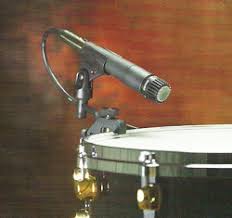
Spot miking is the practice of placing the microphones close, around a few feet to the sound source. This is a good technique because you get less reverb and delay in the recorded end result. Moreover, you can isolate the instrument and keeps several instruments in individual tracks. This is beneficial as it makes mixing easier so you can lower or increase the gain of an instruments for example. This mic technique is good for both live performances and studio recording.However, in live performances, you have to get the microphone very close to the sound source as it increases the ratio of direct sound to background noise. The bigger the difference between the sound source and background noises, the higher you can turn up the gain on the mixing desk without having feedback.
https://www.dummies.com/art-center/music/recording-music/effective-use-of-spot-microphones/
Stereo Miking
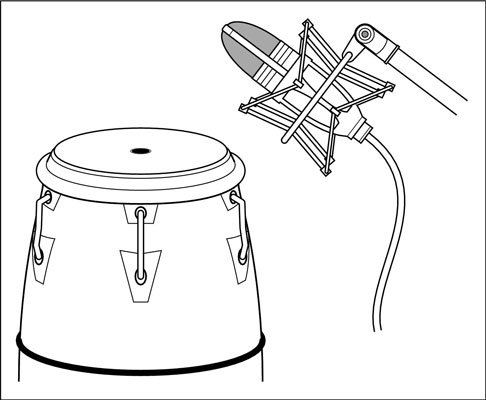
The technique of recording with two microphones simultaneously is called stereo miking. Each microphone is placed the left and the right of the overhead. Stereo tracks create a sense of width in the recording. This type of recording tries to mimics the function of two human ears but the timing of the microphones can be delayed so this miking technique gives an unnatural stereo image. For stereo miking you can also make the two microphones have different distances. The microphone that is closer to the instrument will pick up the sound quicker than the microphone that is further away.https://theproaudiofiles.com/4-stereo-miking-techniques/
DI Box


A DI box turns a unbalanced signal into a balanced signal. Unbalanced signals are likely to have background noises and inconvenient interference. Many instruments have unbalanced outputs (guitars, bass guitars, keyboards etc). Connecting these instruments to a DI box converts them to a balanced output.
https://www.dawsons.co.uk/blog/why-use-a-di-box
For instruments like guitars and pianos, they need a different cable because they have jack inputs but the stage box has XLR inputs so the DI box, which stands for Direct Injection helps connect instruments with jack inputs to the stage box because the input for the DI box is a jack and on the other side of the cable is XLR.
Stage Box
A stage box is a rugged metal in a protective casing, it can be attached to a plug or placed on a wall. Stage boxes are a fundamental tool when it comes to sound engineering as it connects microphones and other equipment to a multi core cable.The boxes are labelled majority of the time for easy use. They can be found in music studios and music venues.
https://www.thomann.de/gb/pro_snake_stage_boxes.htmlhttps://www.prosoundweb.com/topics/studio/tech_tip_of_the_day_controlling_room_mics/
Condenser Microphones
In studios, condenser microphones are used in because they are very sensitive to picking up sound. They have ambient sound.This means that audio translated from the condenser microphone is an accurate representation of what is being sung. What's so good about the condenser microphone is that there are different polar patterns. An condenser microphones like unbalanced instruments, need phantom power. This is because the diaphragm in the microphone vibrates creating a electric signal which is sent down the cable to the mixer. Condenser mics wouldn't be used in a live performance because it wouldn't efficient in that environment. This is because condenser microphones have a built deemed as fragile These type of microphone are good for enclosed and controlled atmospheres like a recording studio.
Omnidirectional- circle shaped pattern which the mic picks up sound from everywhere in the room. This polar pattern is good for big groups of performers, for example choirs and orchestras
Cardiod- this polar pattern is in the shape of a heart, sound is only picked up from one side. This polar pattern can be used for one singer/ vocalist
8 figure- The patterns is in the shape of an eight and sound is picked up from the front and the back of the microphone. This is useful for two singers.
Dynamic Microphones
Unlike condenser microphones, dynamic mics are robust, which makes them good for live performances as there is less worry about them being damaged. They can also be used in studios also but condenser microphones are preferred because of their higher accuracy level. Dynamic microphones do not need phantom power. If they are many vocalists that are needed for recording, you can use a condenser microphone for the lead singers and then have dynamic mics for the backing vocalists. Majority of musicians have dynamic microphones because they are less expensive then condenser mic. Dynamic microphones are good at recording loud sounds due to their maximum sound pressure level (SPL). If you do want to record then it is advised to use a large diaphragm dynamic mic.
https://www.thoughtco.com/condenser-vs-dynamic-microphones-1817725
Miking Techniques For Different Genres
The way you record your projects and the miking techniques you use can depend on the genre of the audio. In Pop music,spot miking the drums is useful since the drums play such an integral role. But for pop ballads and other genres like jazz having the microphone very close to the drums would be over powering. For jazz, the drums are not the most important instrument but rather the brass instruments like the saxophone and trumpets are. Pop ballads have a sentimental tone with a soft timbre so spot miking would ruin the intended vibe.
Control Room
Where you control the production of the audio is the control room. The control is a smaller room facing the studio section where people perform. In this room there is a computer which a DAW software. In this case we have Mac computer and using the software Logic Pro X. Moreover there is a digital mixer. On there is a button that turn on and off the phantom power (48V).
Talk Back Button
There is also a talk back button. The talk back button is useful because it allows engineers who are in the control room to talk to the musicians in the other room. Just simply hold the button down whilst talking and the musicians should be able to hear via headphones. Because you the mixing desk is digital you are able to select inputs and alter individual tracks to your desire.https://en.wikipedia.org/wiki/Talkback_(recording)
Logic Input & Output
When you open Logic, press the + sign on the top left corner to add tracks. From there, you type in how many tracks there are based on what you wrote on your track sheet. Using the sheet in the information prior, there would be 8 tracks. Having the tracks in ascending order makes it easier to follow. So if the kick is input 1 for example, and the output is 9 then input 2 would be output 10.https://support.apple.com/kb/PH13358?locale=en_GB&viewlocale=en_US
Comments
Post a Comment