Legislation: Copyright.
As an musician it is essential that we know laws that are set to protect our work and stimulate creativity.The purpose of copyright is to promote the progress of Science and Arts, giving creators exclusive rights.
Statue of Anne


The first Copyright Music law passed in the UK was the Statue of Anne,1710. The copyright term lasted 14 years and could be renewed for an additional 14 years. This law was created to promote and "encourage" creativity. I think that this regulation is not efficient because the duration of protection is not long enough, once 14 years is over someone else can claim ownership which is morally wrong.
Berne Convention

Now, the copyright duration lasts for 70 years under the Berne Convention(1886).
The Berne Convention was made for the protection of Literary and Artistic works. Copyright is active immediately with no need to register and the musician/creator is credited as copyright owner. The disadvantage of this is the lack of an established legal process, which can make musicians feel like their work is not secure. This law was not fully executed until 1988.
How to receive Copyright( Poor Man's Copyright.)
To get copyright, you must have a physical copy of your work, for example a CD or a score. Make sure you include all the artist/ band details as you want to prevent a dispute. Then you date stamp and leave the post unopened. This is important because if you open it you may be accused of tampering the evidence.
https://en.wikipedia.org/wiki/Poor_man%27s_copyright
"The real truth is that even though you have copyrighted your song just by writing it, you do NEED to register your work so you can be eligible to take advantage of the statutory damages rule that allows courts to fine people who violate your copyright."
Which I feel like undermines Poor Man's Copyright and makes musicians less likely to trust legal transactions.
https://diymusician.cdbaby.com/music-rights/poor-mans-copyright-songwriters-separating-truth-fiction/
The Copyright Pie
In the sound and music industry, there is several organisations/people whose rights vary:
- Songwriters
- Record Company
- Music Publisher
- Consumer
Songwriters
Songwriters have ownership of the song and of the words and music. Songwriters have somewhat control of where their songs are played. Copyright is in place for songwriters so they are able to make money as well as moral reasons.
Record Company
Owns copyright of the sound recording. The Record Company's strategy is to sell a vast amount of records.
Music Publisher
The publisher typically have a close relationship with the songwriter. Publishers have a lot of responsibilities ranging from registering copyrights to collecting monies due. This is an essential service as musicians who are touring can not always keep up to date.
Consumers
Consumers are important as they are the foundation of the artist in terms of popularity and wealth. But, fans are less likely to pay for CD's or music from their favourite artist and would rather listen to it for free from streaming apps such as Spotify and YouTube.This issue makes it difficult for musicians to have financial stability. We unfortunately live in age where
Piracy and Infringement
This topic brings out controversy as to whether it is right on or wrong depending the on the view point. From many case studies the question "Is copyright piracy relatively harmless or one that doesn't hurt anyone, even though it's illegal?" Plagiarism is generally undermined since it doesn't harm anyone but it is morally wrong. Since fans have access to free music by streaming and downloading files, they are less likely willing to pay. This hinders everyone in the sound and music industry. As a musician, I would feel upset that my work is being used without my permission
Forms of Copyright
There are two types of copyright: sound and music and sound recording. The sound recording copyright lasts 70 years. Words and Music last the creator's lifetime plus 70 years. This is useful for musicians who make a living out of their so they can live stress free and even support their family for generations to come.
The person/organisation that made the arrangements for the recording receives the sound recording copyright which I think is fair.
https://info.legalzoom.com/forms-copyright-infringement-23122.html
Napster


Napster was founded in 1999 by Shawn Fanning and Sean Parker and was one of the first peer to peer file sharing service. It was mainly audio files of music. Napster became huge with over 80 million users worldwide and over a billion searches daily. However, record companies and artists were not happy as people began to buy CD's or albums less. Songs or albums that were not released from artists were circulating on the Internet service.
https://en.wikipedia.org/wiki/Napster
Many artists and Record companies were not happy with the protocol of Napster.
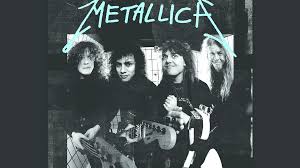
Heavy metal band Metallica discovered a demo of their song "I Disappear" was across the network Napster before it was released.
This led to it being played on several radio stations across the United States and alerted Metallica to the fact that their entire back catalogue of studio material was also available. On March 13, 2000, they filed a lawsuit against Napster. A month later, rapper and producer Dr. Dre, who shared a litigator and legal firm with Metallica, filed a similar lawsuit after Napster refused his written request to remove his works from its service.
'Howard King, a lawyer acting for both, told Hollywood Reporter: "Napster is on the way to dying but that was never what my clients were trying to accomplish. [They] wanted to bring public awareness to the rights of artists and stop people like Napster from trading on their property without their consent."'
https://www.theguardian.com/culture/2001/jul/14/artsfeatures.internet
https://www.theguardian.com/music/2013/feb/24/napster-music-free-file-sharing
Since Napster in the 2000's, there have been other apps which adopted the same idea of streaming music for free such as You tube and Spotify which highlights that copyright is not taken seriously.
Suggestions to prevent Copyright
A way to make piracy more difficult is through the company DRM( Digital Rights Management) which try to protect copyright laws in social media and the internet by lowering the risk of consumers being able to distribute copyrighted works. DRM make sure that systems and technology are applying the law within.
However, many people say that DRM have little influence on enforcing the copyright law due to little to no evidence.
Educational Campaigns- Making people aware of copyrights and the effects helps lowers the amount of people who do these illegal acts. Moreover, it informs people who do want to put their work in the public eye what their rights are.
Authorised Online Service- Apps that streams music like iTunes and Spotify where people know can pay for their music online.
iTunes
The music app was the first released on January 9th 2001. During the time, Record Companies were filing law suits against Napster for copyright infringement. As a result less people went to record stores to buy albums. Artists and Record Companies were losing money. But then Steve Jobs created iTunes Store which became the middle way as consumers could listen to music but at an affordable price.
https://en.wikipedia.org/wiki/ITunes_Store
Consumers
Consumers are important as they are the foundation of the artist in terms of popularity and wealth. But, fans are less likely to pay for CD's or music from their favourite artist and would rather listen to it for free from streaming apps such as Spotify and YouTube.This issue makes it difficult for musicians to have financial stability. We unfortunately live in age where
Piracy and Infringement
This topic brings out controversy as to whether it is right on or wrong depending the on the view point. From many case studies the question "Is copyright piracy relatively harmless or one that doesn't hurt anyone, even though it's illegal?" Plagiarism is generally undermined since it doesn't harm anyone but it is morally wrong. Since fans have access to free music by streaming and downloading files, they are less likely willing to pay. This hinders everyone in the sound and music industry. As a musician, I would feel upset that my work is being used without my permission
Forms of Copyright
There are two types of copyright: sound and music and sound recording. The sound recording copyright lasts 70 years. Words and Music last the creator's lifetime plus 70 years. This is useful for musicians who make a living out of their so they can live stress free and even support their family for generations to come.
The person/organisation that made the arrangements for the recording receives the sound recording copyright which I think is fair.
https://info.legalzoom.com/forms-copyright-infringement-23122.html
Napster
Napster was founded in 1999 by Shawn Fanning and Sean Parker and was one of the first peer to peer file sharing service. It was mainly audio files of music. Napster became huge with over 80 million users worldwide and over a billion searches daily. However, record companies and artists were not happy as people began to buy CD's or albums less. Songs or albums that were not released from artists were circulating on the Internet service.
https://en.wikipedia.org/wiki/Napster
Many artists and Record companies were not happy with the protocol of Napster.
Heavy metal band Metallica discovered a demo of their song "I Disappear" was across the network Napster before it was released.
This led to it being played on several radio stations across the United States and alerted Metallica to the fact that their entire back catalogue of studio material was also available. On March 13, 2000, they filed a lawsuit against Napster. A month later, rapper and producer Dr. Dre, who shared a litigator and legal firm with Metallica, filed a similar lawsuit after Napster refused his written request to remove his works from its service.
'Howard King, a lawyer acting for both, told Hollywood Reporter: "Napster is on the way to dying but that was never what my clients were trying to accomplish. [They] wanted to bring public awareness to the rights of artists and stop people like Napster from trading on their property without their consent."'
https://www.theguardian.com/culture/2001/jul/14/artsfeatures.internet
The Effects of Napster
Napster changed the structure of the Music Industry in one of the most controversial ways. Because of this, the sound and music industry and had to change their constitution in order to prevent debt/bankruptcy. Record Labels merged together for example Sony/BMG. Napster created a massive strain on Record Companies and soon smaller Indie labels started to form. Before, consumers use to go to the stores to buys records and albums the significant decrease in Record sales left Record stores like HMV and Buster to close down. This resulted in many people losing their jobs.https://www.theguardian.com/music/2013/feb/24/napster-music-free-file-sharing
Since Napster in the 2000's, there have been other apps which adopted the same idea of streaming music for free such as You tube and Spotify which highlights that copyright is not taken seriously.
Suggestions to prevent Copyright
A way to make piracy more difficult is through the company DRM( Digital Rights Management) which try to protect copyright laws in social media and the internet by lowering the risk of consumers being able to distribute copyrighted works. DRM make sure that systems and technology are applying the law within.
However, many people say that DRM have little influence on enforcing the copyright law due to little to no evidence.
Educational Campaigns- Making people aware of copyrights and the effects helps lowers the amount of people who do these illegal acts. Moreover, it informs people who do want to put their work in the public eye what their rights are.
Authorised Online Service- Apps that streams music like iTunes and Spotify where people know can pay for their music online.
iTunes
The music app was the first released on January 9th 2001. During the time, Record Companies were filing law suits against Napster for copyright infringement. As a result less people went to record stores to buy albums. Artists and Record Companies were losing money. But then Steve Jobs created iTunes Store which became the middle way as consumers could listen to music but at an affordable price.
https://en.wikipedia.org/wiki/ITunes_Store
Comments
Post a Comment